
Localized marketing
Localization is how you take your product global. It goes far beyond simple translation--it means adapting the entire user experience to a new market, from language and currency to cultural nuances and marketing. For digital products, this is a direct path to unlocking new markets, finding customers in less competitive landscapes, and building a truly international brand.
- Effort
- High
- Cost
- High
- Time to first result
- 3-6 months
- Best for
- SaaS, Apps, E-commerce
Save this strategy and send it to my inbox
Get the full playbook - scripts, tool stack and checklist - delivered as a single email you can act on today.
No spam. One email, and only what is worth reading.
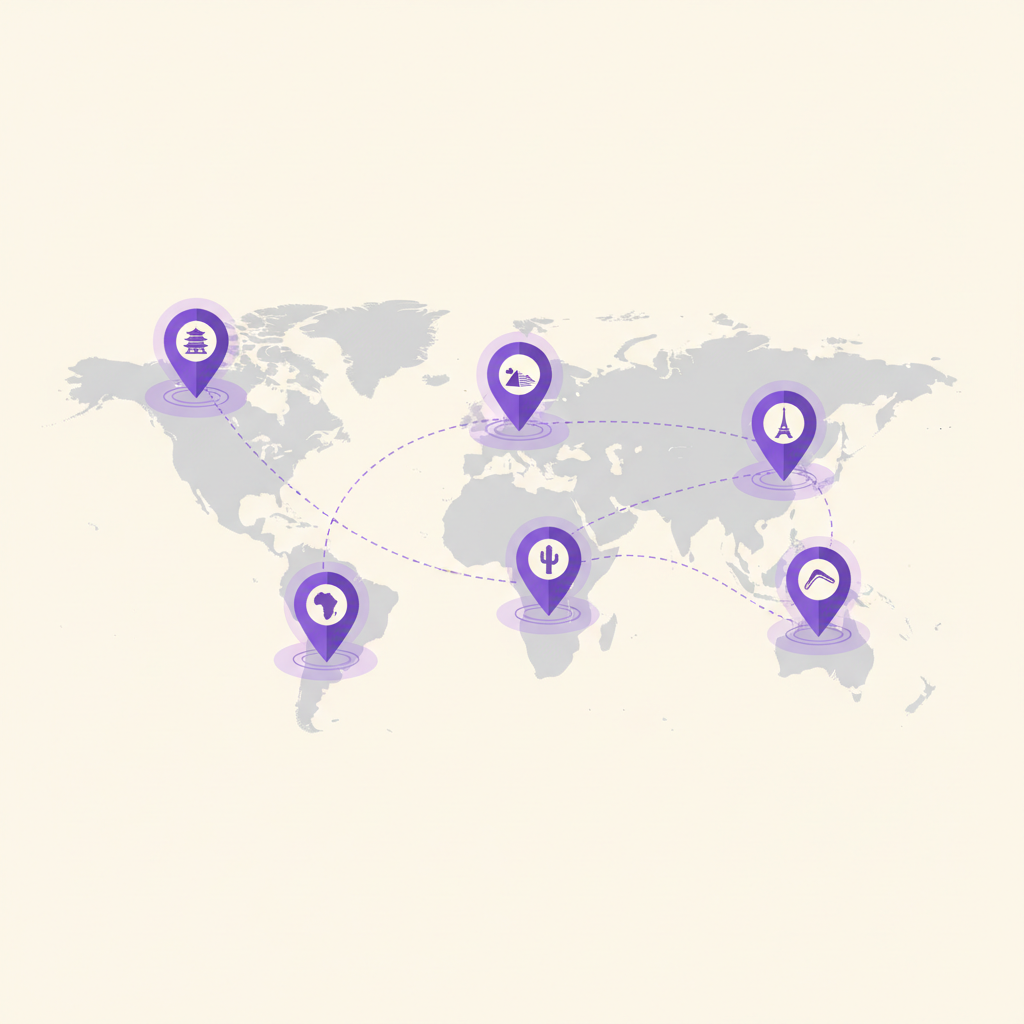
Why Localized Marketing Is a Growth Multiplier
People overwhelmingly prefer to buy in their native language. A frequently cited survey by CSA Research found that 76% of online shoppers prefer to buy products with information in their own language. When you localize your product, you remove a massive friction point and build immediate trust. Users feel that the product is "for them," not just an afterthought, which dramatically increases conversion rates from visit to sign-up and from trial to paid.
Entering non-English markets can give you a powerful competitive advantage. While everyone fights for customers in the crowded, expensive US market, you can find traction in countries with lower customer acquisition costs. Localizing your site also has huge SEO benefits, allowing you to rank for keywords in different languages and capture organic traffic that your competitors are completely missing. It opens up new user bases that were previously unreachable.
Three real examples
Canva Reaches 170M+ Users by Speaking Their Language
Canva's explosive growth is closely tied to its aggressive localization strategy. By translating its simple design tool into over 100 languages, they made it accessible to a massive global audience. They didn't just translate the interface; they localized templates and marketing, making the tool feel native everywhere. This strategy was key to scaling beyond English-speaking countries and becoming a household name worldwide.
Source: CanvaNetflix Dominates Globally by Thinking Locally
Netflix's international success isn't just about making its app available in different languages. They invest heavily in creating local original content, running country-specific social media accounts, and adapting marketing campaigns to local tastes. This deep form of localization makes users in each market feel like Netflix is a local company, leading to immense brand loyalty and subscriber growth.
Source: Netflix Q1 2024 Letter to ShareholdersWise Builds Trust by Localizing Payments
For a fintech company like Wise (formerly TransferWise), trust is everything. They achieved it by localizing their product to the financial realities of each country. This means not only translating the app but also integrating with local payment systems and understanding regional regulations. By doing so, they offer a service that feels safer and more familiar than using a traditional, one-size-fits-all bank for international transfers.
Source: WiseBonus: Remember to localize your App Store or Google Play Store listings as well--including the description, screenshots, and keywords.
The step-by-step playbook
- 1
Step 1: Find Your Top Markets
Use your web and product analytics to see which countries are already sending you traffic or signups. This is your demand signal. Look for countries where you have a high number of visitors but a low conversion rate--language is likely the barrier.
- 2
Step 2: Scope Your Localization MVP
Don't boil the ocean. For your first market, choose a small but high-impact surface to localize. This could be your main marketing landing page, your pricing page, and the user onboarding email sequence. The goal is to test the market with minimal investment.
- 3
Step 3: Hire a Native Speaker (Not Just an Agency)
For your core copy, avoid relying solely on machine translation. Use a platform like Upwork or Contently to hire a freelance native speaker from your target country. They can translate your MVP copy and provide crucial feedback on cultural context.
- 4
Step 4: Internationalize Your Codebase (i18n)
Work with your developers to separate text strings from the code. This process, called internationalization (i18n), allows you to add new languages without rewriting the application. Use libraries like 'react-i18next' for web apps to manage language files.
- 5
Step 5: Translate and Review
Send your scoped-out text files to your translator. Once you get them back, have them review the translated text 'in context' on a staging server or preview link to catch awkward phrasing or layout issues.
- 6
Step 6: Localize Pricing and Payments
Use a payment provider like Stripe to display prices in the local currency. Research and enable the most popular payment methods for that country (e.g., iDEAL in the Netherlands, Giropay in Germany). This is a massive conversion lever.
- 7
Step 7: Launch and Promote
Deploy your localized pages. Update your website to automatically detect browser language and direct users to the right version. Run a small, geo-targeted ad campaign on Google or Facebook announcing your new local version to drive initial traffic.
- 8
Step 8: Set Up Localized Support
At a minimum, create a translated FAQ page. You can use a tool like Jasper.ai for a first pass on support docs and have your freelancer review them. Provide email support where you use AI to translate incoming messages and your replies.
How to Find Your First Localization Expert
Use this template to post a job on freelance platforms like Upwork. It focuses on finding a partner who can provide both translation and cultural insights.
Subject: Seeking Native {Target Language} Speaker for SaaS Website Localization

Hi,

We're looking for a native {Target Language} speaker to help us localize our software product, {Your Product Name}, for the {Country} market.

{Your Product Name} is a {briefly describe your product, e.g., 'project management tool for small businesses'}.

This is an initial freelance project with the potential for ongoing work. The first task includes:
1. Translating our main website landing page (~{word count} words).
2. Reviewing the translated text in our test environment to ensure it fits the context.
3. Providing feedback on cultural nuances, imagery, or phrasing that might not resonate with an audience in {Country}.

Please apply if you:
- Are a native {Target Language} speaker and fluent in English.
- Have proven experience in translation, preferably for software or technology products.
- Can provide examples of past translation/localization work.

In your application, please tell us your per-word rate or a flat fee for this initial project.
Key Questions for Your Localization Strategy
- Which non-English speaking countries are already sending us the most traffic?
- What's our MVP for localizing for our #1 target market? The landing page? Onboarding emails?
- Can our tech stack support multiple languages easily (is it internationalized)?
- What popular payment methods are we missing for that market?
- Beyond the product, what else do we need to localize? (ads, support docs, app store listings)
Start with the data. Answering the first question--where traffic is already coming from--is your most reliable signal for where to focus your efforts first.
Recommended tools
June.so
Starts from $25/moUse June to analyze your user base and identify which countries have the most signups. It provides the data you need to make an informed decision on which market to localize for first.
Jasper.ai
Starts from $39/moGreat for getting a "first draft" translation of non-critical content like help docs or internal communications. Always have a native speaker review for critical user-facing copy.
Lokalise
Starts from $120/moA translation management system (TMS) that helps you manage language files and collaborate with translators. It integrates with your code to streamline the process.
Stripe
Pay-as-you-goEssential for handling international payments. Stripe allows you to display local currencies and accept dozens of region-specific payment methods automatically.
Prices are indicative and change - check the vendor before buying.
Do it faster with AI Prompts
Market Opportunity Analysis
I run a SaaS product called {product name} that helps {describe your product}. Our analytics show that our top 3 non-English traffic sources are {country 1}, {country 2}, and {country 3}. Act as a market expansion consultant and give me a brief on the opportunity of localizing for {country 1}. Include potential market size, key local competitors, and cultural considerations for marketing.
Cultural Nuance Check
I'm localizing my app's marketing copy for the {country} market. My main slogan is '{Your Slogan}'. How does this translate culturally into {language}? Are there any hidden meanings, awkward phrases, or better ways to convey this idea to a native-speaking audience?
First-Pass Translation
Translate the following user onboarding instructions into formal {language}. The tone should be helpful and professional. Text: '{Paste your English text here}'
Mistakes that kill this play
- Using only machine translation for user-facing copy. It often misses nuance and can sound robotic, eroding trust.
- Forgetting to localize visuals. Images of people, places, or even hand gestures may not be appropriate for all cultures.
- Ignoring local SEO. You need to research and target keywords in the local language, not just translate your English keywords.
- Not offering local payment methods. Forcing users to pay in USD with a credit card is a major point of friction in many countries.
- Failing to provide any customer support in the new language. Even a translated FAQ is better than nothing.
- Hiding the language switcher. Make it easy for users to find and switch to their preferred language.
Your First Week of Localization
- Day 1: Dive into your analytics (Google Analytics, June.so). Identify your top 5 non-English speaking countries by traffic and, if possible, sign-ups.
- Day 2: Choose ONE country to be your pilot market. Research its primary language, market size for your category, and main competitors.
- Day 3: Define your localization MVP. List the specific pages, emails, or flows you will translate first (e.g., Homepage, Pricing Page).
- Day 4: Use the script in this playbook to post a job on Upwork or a similar platform to find a freelance translator from your target country.
- Day 5: While applicants come in, talk to your dev team. Ask them to investigate what it would take to internationalize the codebase to support language switching.
- Day 6: Interview and hire your top translation candidate. Prioritize experience in your industry and strong communication skills.
- Day 7: Send the content for your MVP to the translator. Set a clear deadline and provide a preview link so they can see the content in context.
Save this strategy and send it to my inbox
Get the full playbook - scripts, tool stack and checklist - delivered as a single email you can act on today.
No spam. One email, and only what is worth reading.
More Level 4 hacks
YouTube influencers
Leverage YouTubers to build awareness by asking for a review.
Twitter/X ads
Target audience on twitter/x.
Sponsor an online community
Reach your target audience with ads.
Sponsor on an event
Reach your audience.
Sponsor podcasts or newsletters
Sponsor podcasts or newsletters targeting your audience.
Reddit ads
Reach audience on reddit.