
Register a domain suffix
A custom domain suffix -- also known as a branded Top-Level Domain (TLD) -- is your own piece of the internet, like .com or .org, but for your brand (e.g., .aws, .google). While complex and expensive to acquire, it's the ultimate branding play. It allows you to create unique, shareable URLs for your users (like 'project.notion.site') that turn them into marketers, transforming your product into a platform and creating a defensible moat.
- Effort
- High
- Cost
- $185,000+
- Time to first result
- 12-24 Months
- Best for
- Branded communities & product ecosystems
Save this strategy and send it to my inbox
Get the full playbook - scripts, tool stack and checklist - delivered as a single email you can act on today.
No spam. One email, and only what is worth reading.
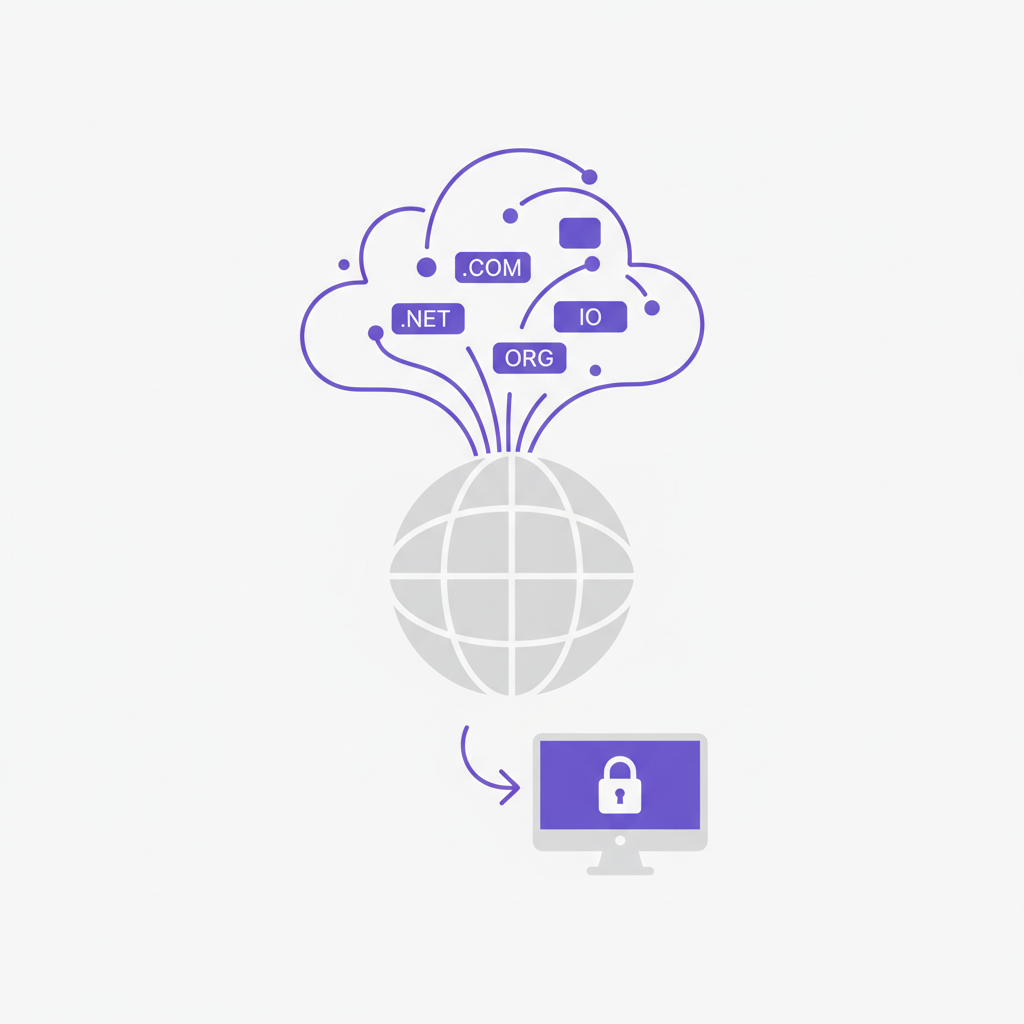
Why a Custom Domain Suffix Works
Exclusivity is the new brand marketing. A custom TLD gives your company an unmatched level of authority and control over your digital presence. It eliminates the possibility of cybersquatting on your brand's TLD and enhances security by creating a trusted namespace only you control. Every link shared becomes a powerful, high-fidelity brand impression, building equity in a way no .com domain ever could.
A custom TLD is a launchpad for virality. By offering subdomains to your users (e.g., username.yourbrand), you give them a novel, valuable asset they are proud to share. This turns your product into a platform and your users into evangelists. It's a product-led growth loop baked into the internet's architecture, where user activity naturally expands your brand's footprint across the web.
Three real examples
Notion turns every user into a publisher with '.notion.site'
Notion allows any user to publish a page to a public URL using their '.notion.site' TLD. This masterstroke of product-led growth means that Notion's users are constantly creating marketing and SEO assets for the company, blanketing the web with Notion-branded content and links.
Source: NotionCal.com makes scheduling personal with '.cal.com'
Cal.com, an open-source scheduling tool, gives users a personal booking page at 'username.cal.com'. This makes the user's personal brand the hero, not the tool. It's a sticky feature that's easy to remember and professional to share, making Cal.com an indispensable part of their users' toolkit.
Source: Cal.comDescript makes sharing projects easy with '.descript.page'
Video editor Descript gives creators a branded landing page for every project they want to share, using the '.descript.page' TLD. This provides a clean, professional way for users to share their work for review and feedback. It keeps the focus on the content while reinforcing the Descript brand with every share.
Source: DescriptSome brands acquire existing, relevant TLDs directly from their current owners via auction or private sale. This can be faster than the ICANN process but is often even more expensive.
The step-by-step playbook
- 1
Step 1: Define the Business Case
Before anything else, define the 'why'. Are you trying to build a user ecosystem like Notion? Defend your brand like Amazon? Create a shareable user asset like Cal.com? A 'cool' idea is not enough; you need a concrete business goal.
- 2
Step 2: Check for an ICANN Application Window
You can't just register a TLD anytime. You must apply to ICANN (Internet Corporation for Assigned Names and Numbers) during specific application windows, which have historically been years apart. Check the official ICANN site for news on the next window.
- 3
Step 3: Secure Your Global Trademark
Your proposed TLD string must be a trademark that you own and can defend. Work with a law firm to ensure your trademark is registered and protected in key international markets before you even consider applying.
- 4
Step 4: Budget for the Real Costs
The ICANN application fee is $185,000. But that's just the start. Budget for legal fees, technical setup, and annual registry operation fees, which can easily push the total cost over $250,000 in the first year.
- 5
Step 5: Find a Backend Registry Operator
You are not expected to run the technical infrastructure of a TLD yourself. You must partner with a specialized company called a Backend Registry Operator (like GoDaddy Registry or Neustar) to handle the DNS, WHOIS, and other critical functions.
- 6
Step 6: Prepare the ICANN Application
The gTLD application is a book-length document covering your company's financial stability, technical competence, and operational plans for the TLD. Start preparing months in advance with your legal and technical partners.
- 7
Step 7: Launch & Market Your TLD
Getting the TLD is just the beginning. Create a go-to-market plan. How will domains be used? Will you give them to users for free? Will they be part of a premium plan? You need a strategy to drive adoption.
The Internal Pitch: Getting Budget for a Custom TLD
This is a massive financial and strategic decision. You'll need buy-in at the highest levels. Use this email template to start the conversation with your CEO or leadership team.
Subject: A new strategic asset: owning our own TLD (.ourbrand)

Hi {ceo_name},

I'm writing to propose a significant strategic opportunity for our brand: acquiring our own custom Top-Level Domain (TLD), '.{brand_name}'.

Companies like Notion (.notion.site) and Cal.com (.cal.com) are using this strategy to build powerful ecosystems and viral growth loops. By giving users a '.{brand_name}' domain, we turn them into brand advocates with every link they share.

This is a major undertaking with a high price tag--the initial ICANN application fee is $185,000, and the process can take over a year. However, the strategic payoff in brand equity, defensibility, and user-led growth could be immense.

I've prepared a short brief on the business case, risks, and timeline. Can we schedule 30 minutes next week to discuss if this is a strategic lever we should explore further?

Best,
{your_name}
Key Questions Before You Start
- What is the single, primary business goal this serves? (e.g., user acquisition, brand defense, community building)
- Can we secure the global trademark for our desired suffix string?
- Do we have board and leadership buy-in for a $250k+ marketing and infrastructure project?
- What is the user's incentive to use a '.ourbrand' domain? What value does it provide them?
- Who is our technical partner for running the registry backend? Have we vetted them?
The most important question is the first one. A custom TLD is an incredibly expensive marketing campaign. If you cannot articulate a clear, measurable goal, do not proceed.
Recommended tools
ICANN gTLD Applicant Guide
Free (Application is $185k+)This is your bible. It's a dense, technical document, but you must understand the rules of the game. Read it before you spend a single dollar.
Trademark Law Firm
$10,000 - $50,000+Non-negotiable. You need legal experts to ensure your brand is protected and can become a TLD. Don't use your standard corporate lawyer unless they specialize in global trademark law.
Backend Registry Operators
$100,000+/yearCompanies like GoDaddy Registry, Verisign, or Identity Digital run the actual infrastructure for TLDs. You must partner with one to handle the technical operations.
Jasper.ai
Starts at $39/moUse an AI writing assistant to brainstorm use-cases, draft internal proposals, and create marketing copy for your TLD launch.
Prices are indicative and change - check the vendor before buying.
Do it faster with AI Prompts
Brainstorm TLD use cases
I am the founder of a {describe your product, e.g., 'SaaS platform for project management'}. We are considering applying for our own custom gTLD, '.{brand}'. Generate a list of 10 specific, creative use cases for how we could offer this TLD to our users to increase growth, engagement, or retention. For each idea, explain the user benefit.
Draft an internal pitch
Write a one-page internal memo to the CEO of '{company_name}'. The memo should make a strong business case for applying for a custom gTLD called '.{brand}'. Include sections on: Strategic Opportunity (mentioning competitors like Notion), Estimated Costs & Timeline, Potential Risks, and a clear 'Next Step' recommendation. The tone should be concise, strategic, and data-driven.
Outline a launch marketing plan
My company, {company_name}, has just been approved for a new gTLD, '.{brand}'. Our goal is to {describe primary goal, e.g., 'get 10,000 users to create a public profile on a .brand subdomain in the first 6 months'}. Create a tactical marketing plan outline for the launch. Include sections for pre-launch, launch day, and post-launch activities.
Mistakes that kill this play
- Underestimating the total cost. The $185,000 application fee is just the ticket to entry. Legal, technical, and marketing costs will significantly increase the total investment.
- Not having a clear 'why'. A TLD without a compelling use case for your users is a vanity project and a waste of money.
- Failing to secure the trademark first. If you don't have a rock-solid, global trademark for the TLD string, your application will likely fail.
- Neglecting the marketing plan. Owning '.yourbrand' is useless if nobody uses it. You need a clear plan to drive adoption from day one.
- Choosing the wrong technical partner. The backend registry is a core piece of infrastructure. Choosing an unreliable or inexperienced partner can kill your TLD.
- Ignoring the long timeline. The process from application to launch can take years. This is not a quick marketing win.
- Thinking you can do it all yourself. You will need specialized legal and technical partners to succeed. This is not a DIY project.
Your First 7 Days of Investigation
- Day 1: Read the executive summary of the latest ICANN gTLD Applicant Guide. Get a feel for the scope and requirements.
- Day 2: Research 5 companies with branded TLDs. Document how they are using them and what the user benefit is.
- Day 3: Brainstorm 10 potential use cases for a '.yourbrand' TLD that align with your company's core business goals.
- Day 4: Have an initial conversation with your company's legal counsel about the status of your brand's trademark.
- Day 5: Identify three potential backend registry operators (e.g., GoDaddy Registry, Identity Digital). Read their case studies.
- Day 6: Write a one-page pitch memo using the template in this playbook. Keep it high-level and focused on the 'why'.
- Day 7: Schedule a 30-minute meeting with a key decision-maker to present your one-pager and gauge their interest.
Save this strategy and send it to my inbox
Get the full playbook - scripts, tool stack and checklist - delivered as a single email you can act on today.
No spam. One email, and only what is worth reading.
More Level 4 hacks
YouTube influencers
Leverage YouTubers to build awareness by asking for a review.
Twitter/X ads
Target audience on twitter/x.
Sponsor an online community
Reach your target audience with ads.
Sponsor on an event
Reach your audience.
Sponsor podcasts or newsletters
Sponsor podcasts or newsletters targeting your audience.
Reddit ads
Reach audience on reddit.