
SSO login
Adding Single Sign-On (SSO) lets users sign up and log in using their existing work accounts, like Google or Okta. For you, it removes signup friction and increases conversion. For customers--especially larger ones--it's a critical security feature. This playbook shows you how to implement SSO to close more B2B deals and make your product stickier.
- Effort
- Medium
- Cost
- Free - Low
- Time to first result
- Days
- Best for
- B2B SaaS, enterprise products, dev tools
Save this strategy and send it to my inbox
Get the full playbook - scripts, tool stack and checklist - delivered as a single email you can act on today.
No spam. One email, and only what is worth reading.
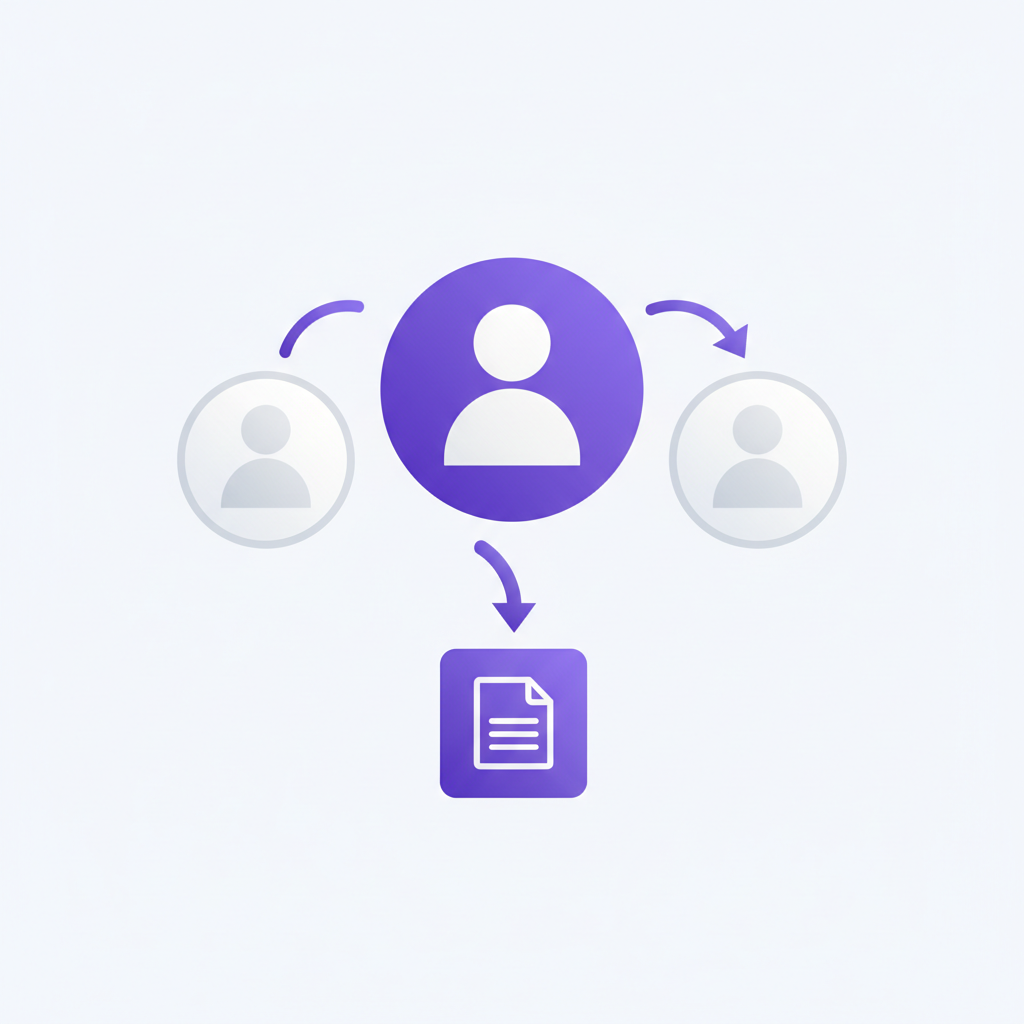
Why SSO is a B2B Growth Lever
SSO reduces friction to zero. A user clicks 'Continue with Google', and their account is created--no forms, no password to invent, no email to verify. This simple UX improvement can significantly lift your signup conversion rate, especially for team-based products where you want everyone to get in and start collaborating instantly.
More importantly, SSO is a security feature that acts as a sales feature. IT departments at large companies don't want their employees creating dozens of separate accounts with weak passwords. SSO lets them enforce their own security policies and manage user access centrally. For many companies, SAML-based SSO isn't just a nice-to-have; it's a mandatory checkbox for procurement. Lacking SSO can get you disqualified from deals instantly.
Three real examples
Notion makes team onboarding seamless with SSO
Notion is a collaboration tool that grew by winning over teams, then entire companies. A key feature for their enterprise customers is SAML SSO. It allows a company's IT team to manage access and security centrally, making it easy to roll out Notion to hundreds of employees at once. This isn't just a convenience--it's a core security requirement for large organizations.
Source: Notion Security PageFigma uses SSO to land enterprise clients
Figma's go-to-market motion involves individual designers loving the product and spreading it within their organizations. To jump from team-use to company-wide adoption, they needed enterprise-grade features. Their Enterprise plan prominently features SSO to meet the security and compliance needs of large customers like Microsoft, making it an easy 'yes' for their IT and security teams.
Source: Figma EnterpriseSlack leverages SSO for frictionless adoption
Slack's explosive growth was fueled by its 'land and expand' strategy. A small team could start using it for free, and SSO made it trivial for more colleagues to join with their company Google account. When it came time to upgrade to a paid plan, the ability to enforce login via SSO was a critical feature for admins to secure the workspace and manage membership, paving the way for company-wide contracts.
Source: Slack Help CenterGating SAML-based SSO (Okta, Azure AD) on an 'Enterprise' plan is a standard and effective way to create a powerful upgrade incentive for your largest customers.
The step-by-step playbook
- 1
Step 1: Gauge customer needs
Before you write any code, figure out which SSO providers your customers or prospects use. Is it Google and Microsoft (OAuth), or do they need SAML-based providers like Okta and Azure AD? Use a simple survey for current users or ask during sales calls.
- 2
Step 2: Choose your identity platform
Don't build everything from scratch. Use a service like Auth0, WorkOS, or Okta. They provide unified APIs and SDKs to handle various SSO protocols, saving you immense development and maintenance time. Most have generous free tiers to get you started.
- 3
Step 3: Design the login UI
Update your login and signup pages. Add prominent 'Continue with {Provider}' buttons. Don't hide them--make them the easiest and most obvious choice. Keep the traditional email/password option visible but secondary.
- 4
Step 4: Implement the authentication flow
Using the SDK from your chosen platform, implement the backend logic. This typically involves redirecting the user to the SSO provider and then handling the callback, which contains the user's information and a security token.
- 5
Step 5: Handle user provisioning and account linking
When a user signs in via SSO for the first time, you need to create an account for them in your database. Decide how to handle existing users who switch to SSO--provide a way for them to link their new SSO login to their old email/password account.
- 6
Step 6: Test the end-to-end flow
Test the entire process: new user signup, existing user login, account linking, and error handling. What happens if the SSO provider is down? What if the user denies access? Test these edge cases.
- 7
Step 7: Update your pricing page and marketing
Decide which plan SSO will be on. For many B2B SaaS, OAuth (Google/Microsoft) is on all plans (even free), while SAML SSO is reserved for a higher-tier 'Enterprise' or 'Team' plan. Announce the new feature on your blog, social media, and in your newsletter.
How to Ask Customers if They Need SSO
Send this email to your largest customers or most promising leads to validate demand and prioritize which SSO providers to build first.
Subject: Quick question about logins at {customer_name}

Hi {customer_name},

My name is {your_name}, I'm the founder of {your_product}.

We're planning our product roadmap and looking to add single sign-on (SSO) to make signing in easier and more secure for teams.

Do you typically require SSO (like Okta, Azure, or Google) for new software you adopt? Learning what you use would help us prioritize.

Thanks for the insight!

Best,
{your_name}
Key Questions to Answer First
- Which SSO providers are most requested by our target customers?
- Should we offer basic social SSO (Google/Microsoft) on all plans?
- Should we gate SAML/enterprise SSO on a higher-tier plan?
- How will we handle merging existing email/password accounts with SSO logins?
- What is our plan for de-provisioning users when they are removed from a customer's directory?
The most important first step is validating which providers your actual customers use. Don't build for Okta if all your customers are on Google Workspace.
Recommended tools
Auth0 by Okta
Starts free for up to 7,500 usersA developer-centric identity platform that makes it easy to add social sign-in and enterprise SSO with a few lines of code.
Tally.so
Starts freeUse Tally's simple and elegant forms to quickly survey your users and ask which SSO providers they need. It's fast, free, and looks great.
June.so
Starts freeAfter you launch SSO, use June to analyze the impact. Track how it affects your signup conversion rate, user activation, and which providers are most popular.
WorkOS
Starts freeAn alternative to Auth0, specifically designed to help you become 'Enterprise Ready' with features like SSO, audit logs, and directory sync.
Prices are indicative and change - check the vendor before buying.
Do it faster with AI Prompts
Write user survey questions
I'm adding Single Sign-On (SSO) to my B2B SaaS product, {product_name}. Generate a 3-question survey for existing users to gauge which SSO providers are most important to them. The tone should be brief and direct. Options should include Google, Microsoft/Azure, Okta, SAML, and 'Other'.
Draft announcement blog post
Write a blog post announcing that our B2B SaaS, {product_name}, now supports SSO. The post should be titled 'Log in with ease: SSO is now available in {product_name}'. Explain the benefits for users (convenience) and for admins (security). Mention that Google/Microsoft login is available on all plans and SAML-based SSO (Okta, Azure AD) is on our new Enterprise plan.
Create help documentation
Write a help desk article for my product, {product_name}, explaining how a new user can sign up and log in using their Google account. Include a step-by-step guide with clear, simple instructions for a non-technical user.
Generate implementation code outline
I'm using Next.js and Auth0. Provide a high-level code outline for a React component that displays a 'Continue with Google' button. On click, it should trigger the Auth0 universal login flow. No need for full implementation, just the key functions and logic.
Mistakes that kill this play
- Hiding SSO on a very expensive plan that your target startup/SMB customers can't afford.
- Failing to provide a way for existing users with passwords to link their accounts to an SSO provider.
- Making the SSO buttons small or hard to find on the login page.
- Not handling error states, such as when the SSO provider has an outage or a user's token is invalid.
- Only building for one specific provider (e.g., just Google) when your customers also need Microsoft or Okta.
- Neglecting to implement proper security measures, like state parameter validation, to prevent CSRF attacks.
- Forgetting to announce the feature. Your customers won't use it if they don't know it exists.
Your First 7 Days
- Day 1: Use Tally.so to create and send a one-question survey to your active users: 'Which SSO provider does your team use?'
- Day 2: Sign up for a free developer account with Auth0 or WorkOS. Explore their documentation and quick-start guides for your tech stack.
- Day 3: Create a simple wireframe or mockup of your new login and signup pages, showing the placement of the 'Continue with...' buttons.
- Day 4: Set up a basic proof-of-concept. Use a sample app or your dev environment to implement a simple 'Login with Google' flow.
- Day 5: Map out the user provisioning logic. What data do you get from the SSO provider? How does it map to your user model? How do you handle first-time vs. returning users?
- Day 6: Decide which plans will include SSO (e.g., OAuth on all plans, SAML on Enterprise). Update a draft of your pricing page.
- Day 7: Review survey results from Day 1 to confirm which providers you need to support first.
Save this strategy and send it to my inbox
Get the full playbook - scripts, tool stack and checklist - delivered as a single email you can act on today.
No spam. One email, and only what is worth reading.
More Level 1 hacks
Video testimonials from customers
Best testimonials there are!
Upgrade button
Highlight the ‘upgrade’ button in your product.
Submit URL to directories for free traffic
Add your URL to directories.
Survey customers
Simply ask your customers.
Testimonials
Use testimonials on your website.
Testimonials on pricing page
Underrated way to remove doubts.