
Automatic Cold DM on X/Twitter
This playbook shows you how to create a system that automatically sends personalized DMs to potential customers on X/Twitter. Instead of manually searching for leads and writing messages one by one, you'll build a machine that targets users based on their real-time actions--like who they follow or what they tweet about. It's a scalable way to start conversations and fill your pipeline directly from a platform where your audience is already active.
- Effort
- Medium
- Cost
- Low to Medium
- Time to first result
- 1-2 weeks
- Best for
- SaaS, B2B services, high-ticket products
Save this strategy and send it to my inbox
Get the full playbook - scripts, tool stack and checklist - delivered as a single email you can act on today.
No spam. One email, and only what is worth reading.
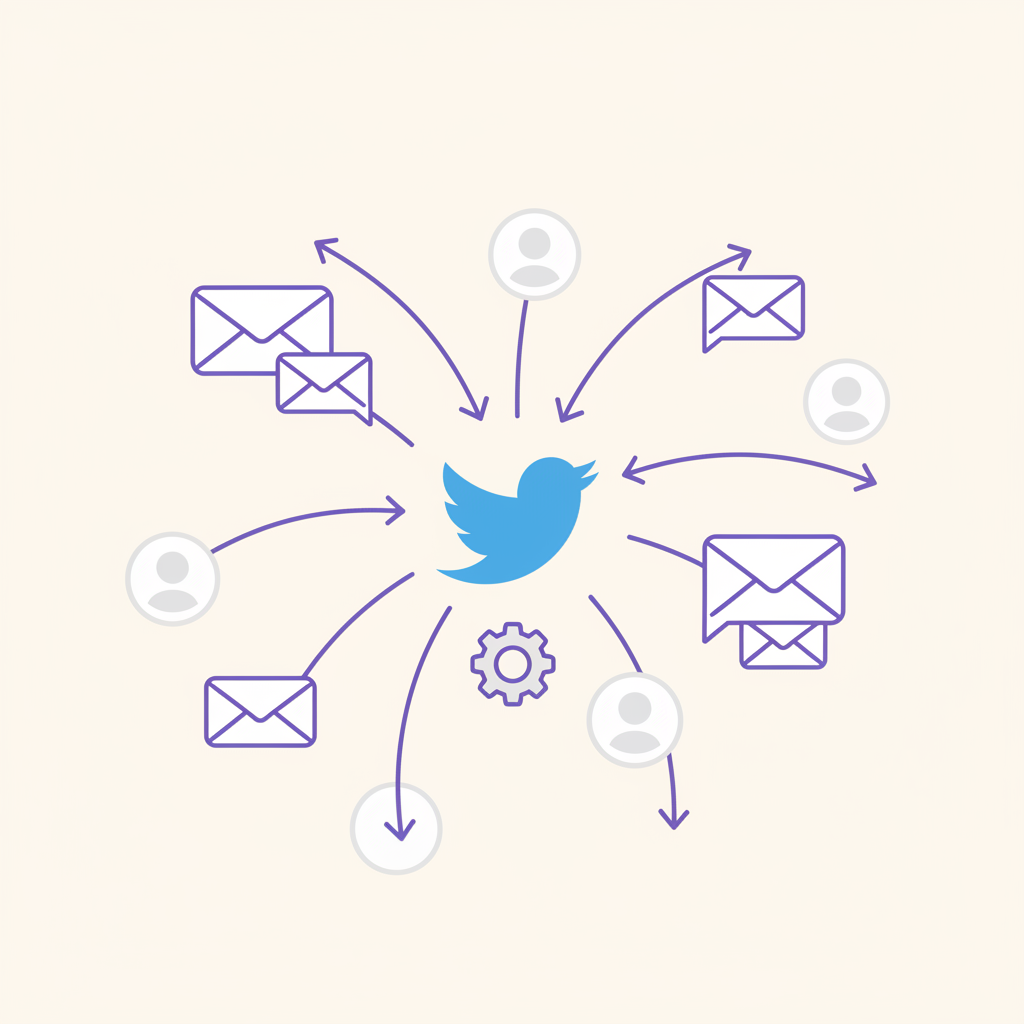
Why Automatic Cold DMs Work
X/Twitter is a goldmine of real-time intent signals. When someone follows a competitor, asks a question using a certain keyword, or engages with a specific tweet, they are expressing a need or interest *right now*. Automated DMs allow you to tap into these signals at a scale impossible to manage manually. You can engage hundreds of highly-targeted prospects per week, ensuring you're one of the first to reach them when they're most receptive.
This method skips the noise of public timelines and lands your message directly in a user's private inbox. It's more personal and direct than an ad. By targeting based on specific actions, your message feels less like a cold interruption and more like a relevant, helpful suggestion. The goal is not to close a sale in the first DM, but to start a genuine one-on-one conversation, which is the starting point for any B2B relationship.
Three real examples
X27 Marketing books 16 meetings in a week
The team at B2B lead gen agency X27 Marketing targeted followers of specific accounts and users who tweeted certain keywords. They used automated DMs to start conversations, which they then converted into qualified sales meetings. This direct approach allowed them to bypass gatekeepers and connect directly with decision-makers who showed active interest in their field.
Source: X27 Marketing BlogHeadlime gets its first users via DMs
Danny Postma, founder of the AI-writing tool Headlime (acquired by Jasper), used DMs to get his first customers. He would find people on X/Twitter complaining about copywriting, and send them a direct message offering his tool as a solution. This hands-on, direct outreach was critical for getting initial traction and feedback before the product took off.
Source: Indie HackersBannerbear validates and grows with DMs
Jon Yongfook, founder of Bannerbear, famously used Twitter DMs to validate his product idea and land his first customers. He searched for people talking about the problem his API solved (automating image generation) and initiated conversations. This strategy was key to his early growth, helping him build a product people actually wanted and would pay for.
Source: Yongfook.comWarm up your X account for at least 2-3 weeks with consistent, manual activity (tweeting, replying, following) before launching any automation. A 'cold' account that suddenly starts auto-DMing is a huge red flag for platform algorithms.
The step-by-step playbook
- 1
Step 1: Define Your Target Signal
Don't just define your customer profile (ICP)--define the action they take on X that signals interest. This could be following a competitor (e.g., @HubSpot), following an influencer in your niche (e.g., @shl), or tweeting a keyword ('looking for a crm').
- 2
Step 2: Optimize Your X Profile
When you DM someone, the first thing they do is check your profile. It must instantly communicate who you are and what you do. Have a clear profile picture, a bio that explains your value proposition, and a pinned tweet that links to your product or a case study.
- 3
Step 3: Choose Your Automation Tool
Select a tool to run your automations. Popular options include TexAu, PhantomBuster, or Clay. These tools work in the cloud and can be configured to watch for your target signals and trigger actions.
- 4
Step 4: Build the 'Listener' Automation
In your chosen tool, set up a 'recipe' or 'phantom' that scrapes a list of users based on your target signal. For example: 'Scrape the latest 50 followers of @competitor'.
- 5
Step 5: Write Your DM Sequence
Draft a short, non-salesy initial DM. Your goal is just to get a reply. Use a personalization tag like {firstName} and reference the context. For example: 'Hey {firstName}, saw you just followed @competitor...'
- 6
Step 6: Build the 'Action' Automation
Create the second part of the workflow that sends the DM you drafted. Ensure you include significant, randomized delays between actions to mimic human behavior and stay off X's radar. Start with a very low volume.
- 7
Step 7: Launch and Set Low Limits
Start your automation, but limit it to 10-15 DMs per day. This is critical to avoid account suspension. Let it run for a few days to gather initial data on open and reply rates.
- 8
Step 8: Monitor and Engage Manually
The automation's job is to start the conversation; your job is to finish it. Monitor your inbox closely and reply to everyone personally. Have a real conversation and be helpful before you pitch.
Copy-Paste DM Template
Use this template for your initial outreach. It's designed to be low-pressure and context-aware, making it more likely to get a positive response. The key is referencing a specific action they took.
Hey {firstName},

Saw you're following {competitor_account}. I'm exploring how folks in the {industry} space handle {problem_you_solve}.

Are you currently using a tool for that or just browsing?

Cheers,
{Your_Name}
Key Questions to Answer First
- Who is my *exact* customer on X and what does their profile look like?
- What 3-5 accounts are they guaranteed to follow?
- What specific keywords or phrases do they use when talking about the problem I solve?
- Is my own X profile credible enough to make someone trust my DM?
- What is my single goal for the first DM? (A reply? A link click? A question answered?)
The most critical questions are about your targeting signals. If you get the audience wrong, the best copy in the world won't work. Spend 80% of your time identifying the right accounts and keywords to track.
Recommended tools
TexAu
Starts at $29/moA powerful automation platform for scraping data and executing actions across multiple websites, including X/Twitter. Great for building multi-step workflows.
PhantomBuster
Starts at $69/moAnother popular automation tool with pre-built 'Phantoms' for tasks like scraping followers or sending DMs. It's known for being slightly more user-friendly for beginners.
Jasper.ai
Starts at $39/moUse an AI writer to quickly generate dozens of variations for your DM copy. This helps you A/B test different angles and avoid sending the exact same message every time.
Apollo.io
Free plan availableWhile not a Twitter tool, you can use Apollo to enrich a list of Twitter profiles with company data. This helps you qualify leads before you even reach out.
Prices are indicative and change - check the vendor before buying.
Do it faster with AI Prompts
Generate DM copy variations
I am setting up an automated cold DM campaign on X/Twitter. My product, {product_name}, helps {customer_type} to {solve_a_problem}. The automation will trigger when a user follows my competitor, {competitor_account}. Write 5 different versions of an initial DM. Each should be under 250 characters, reference the fact they followed the competitor, be friendly and not salesy, and aim to start a conversation by asking a simple question.
Brainstorm targeting signals
My company sells {product_description}. Our Ideal Customer Profile is a {job_title} at a {company_type} company. Brainstorm 10 specific and non-obvious targeting signals on X/Twitter I can use to find these people. Include a mix of accounts they might follow, keywords they might tweet, and hashtags they might use.
Write a follow-up message
Write a short, polite follow-up DM for someone who received my first automated DM but didn't reply. The first message was: '{paste_first_message_here}'. The follow-up should be sent 3 days later, add a small piece of value (like a link to a helpful article or a surprising stat), and not be pushy.
Optimize X/Twitter Bio
My SaaS, {product_name}, does {what_it_does}. My target customer is a {customer_type}. Rewrite my X/Twitter bio to be clear, credible, and compelling to this audience. The bio should make them want to reply to my DM. It must be under 160 characters. Include a call to action.
Mistakes that kill this play
- Being too salesy in the first DM. Never open with a link to your pricing page. The goal is a conversation, not a conversion.
- Using generic, impersonal copy. If your message doesn't reference a specific context ('saw you followed X'), it will be ignored.
- Sending too many DMs too fast. This is the #1 way to get your account suspended. Start with 10-15 per day and slowly ramp up if needed.
- Having a blank or unprofessional profile. People will vet you before they reply. Your profile must build immediate credibility.
- Targeting too broadly. Scraping followers of a massive account like @elonmusk is useless. Target smaller, highly-relevant niche accounts.
- Not having a system to manage replies. If the automation works, you'll get dozens of conversations. Be ready to handle them promptly and personally.
- Automating follow-ups indefinitely. The automation should only be for the first 1-2 messages. After that, the conversation must be 100% human.
Your First 7 Days
- Day 1: Finalize your ICP and identify 10 'trigger' accounts or keywords. Write these down. These are the watering holes where your customers hang out.
- Day 2: Sign up for a free trial of an automation tool like TexAu or PhantomBuster. Watch their introductory tutorials to understand the interface.
- Day 3: Write 3 different versions of your initial DM using the template provided. Keep them short, personal, and focused on starting a conversation.
- Day 4: Set up your first workflow. Start with the simplest one: scrape new followers of your top competitor's X account.
- Day 5: Launch the automation. Set the daily limit to a maximum of 15 DMs. Let it run in the background.
- Day 6: Check your DMs. Reply manually to anyone who responded. Note down your reply rate. Did 1 in 15 reply? 3 in 15?
- Day 7: Review the initial results. If you got zero replies, pause the campaign and rework your copy or targeting. If you got a few, keep it running and prepare to handle more conversations.
Save this strategy and send it to my inbox
Get the full playbook - scripts, tool stack and checklist - delivered as a single email you can act on today.
No spam. One email, and only what is worth reading.